
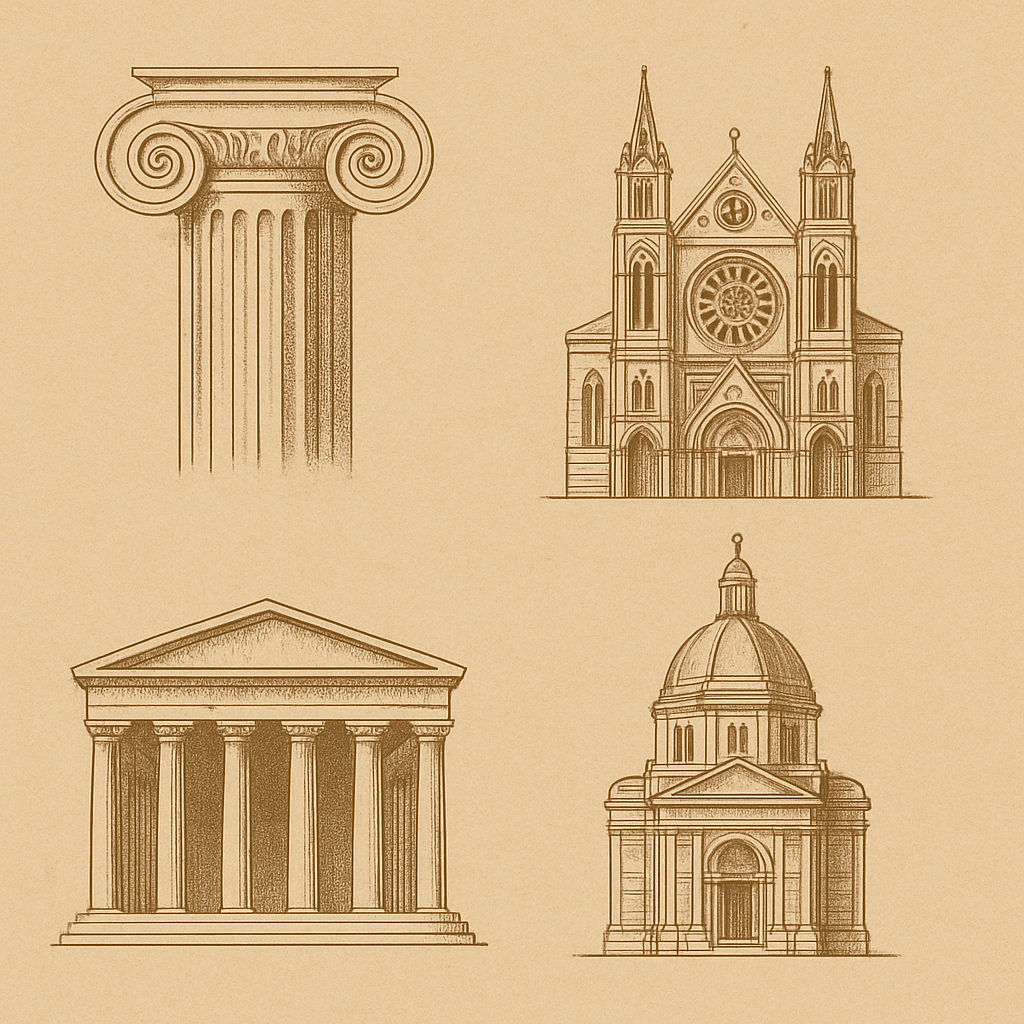
The echoes of ancient civilizations still resonate through the grand structures they left behind. Classical architecture is more than just visually stunning; it reflects human achievement and cultural significance. In this blog post, we will explore five classical buildings that not only showcase the architectural brilliance of their time but also represent the rich history and cultural heritage of their societies.
The Parthenon, Greece
Nestled in the Acropolis of Athens, the Parthenon is a symbol of ancient Greece’s architectural mastery. Built between 447 and 432 BC during the Athenian Empire, this temple is dedicated to Athena, the city’s patron goddess. Designed by architects Ictinus and Callicrates, the Parthenon stands as a proud reminder of democratic ideals and Western civilization.
The Parthenon is notable for its exquisite use of the Doric order and employs optical illusions to create an impression of perfect symmetry. For example, it features a slight curvature in the columns that makes the building appear straight from a distance.
Over the centuries, the Parthenon has served different purposes, including a Christian church and a mosque under Ottoman rule. Today, as a UNESCO World Heritage Site, it attracts around 3 million visitors annually, who marvel at its grandeur and reflect on the values of ancient Greece.

The Colosseum, Italy
In the heart of Rome, the Colosseum stands as a monumental testament to ancient Roman engineering. Opened in AD 80 under Emperor Titus, this colossal amphitheater accommodated over 50,000 spectators and was the scene of gladiatorial contests, animal hunts, and public spectacles. An impressive 87% of the original structure is still intact, allowing us to glimpse the Roman way of life.
Beyond entertainment, the Colosseum was a social hub and showcases Roman architectural innovation. The use of arches and concrete construction set the foundation for countless structures that followed. Notably, the Colosseum endured significant damage from earthquakes, yet remains a vital symbol of Rome’s enduring legacy.
As one of the world’s most visited monuments, the Colosseum receives roughly 7 million visitors each year, fascinated by its historical significance and cultural richness.

The Great Wall of China
Stretching thousands of miles across northern China, the Great Wall is a remarkable blend of history and myth. Construction started in the 7th century BC, with various dynasties contributing to its vast expanse over the centuries. Initially built for protection against invasions, the wall also facilitated trade and cultural exchange along the Silk Road.
The Great Wall symbolizes the determination and craftsmanship of the Chinese people. It is estimated that over a million laborers were involved in its construction, facing immense challenges, such as harsh terrain and limited resources. Today, certain sections of the wall are still preserved, with around 30% of it remaining intact.
Recognized as a UNESCO World Heritage Site, the Great Wall attracts about 10 million visitors each year, who walk along its ancient pathways and appreciate its strategic importance.

The Pyramids of Giza, Egypt
The Pyramids of Giza are perhaps the most iconic symbols of ancient Egypt. The Great Pyramid, built for Pharaoh Khufu around 2580 BC, showcases the Egyptians’ architectural and engineering prowess. Each pyramid served as a tomb and was believed to assist in the pharaohs’ journey to the afterlife.
Remarkably, the pyramids were constructed using over 2 million stone blocks, some weighing as much as 2.5 tons each. This construction feat highlights the historical advancements in mathematics and engineering of the time. The Giza Pyramid Complex includes smaller pyramids and temples, reinforcing the civilization’s religious beliefs.
Listed as one of the Seven Wonders of the Ancient World, the Pyramids of Giza draw around 14 million visitors annually, representing the rich cultural heritage of ancient Egypt.

The Hagia Sophia, Turkey
The Hagia Sophia is a monumental masterpiece that stands as a testament to the architectural ingenuity of its time. Originally constructed as a cathedral in 537 AD during the reign of Byzantine Emperor Justinian I, it served as the central church of Eastern Orthodox Christianity for nearly a thousand years before being converted into a mosque in 1453 following the Ottoman conquest of Constantinople.
The design of the Hagia Sophia showcases a remarkable fusion of architectural styles, combining elements of Roman, Byzantine, and Islamic architecture. Its massive dome, which appears to float above the central nave, is an engineering marvel that has influenced countless buildings throughout history.
Beyond its architectural brilliance, the Hagia Sophia is steeped in rich history and cultural significance. It has been a site of worship for both Christians and Muslims, symbolizing the diverse religious heritage of Istanbul. Today, it attracts millions of visitors each year, who come to marvel at its stunning mosaics, grand scale, and the intricate interplay of light within its vast interior.

Reflections on Ancient Wonders
These five classical buildings not only showcase the brilliance and creativity of ancient civilizations but also embody profound historical and cultural significance. From the Parthenon’s celebration of democratic ideals to the Taj Mahal’s enduring love story, these structures hold a unique place in human history. Each place teaches us invaluable lessons about our past, encouraging us to appreciate the diversity of human experience.
By exploring these ancient wonders, we become part of a larger narrative, one that transcends time and connects us to our shared heritage. The marvels of the past will continue to inspire and educate generations to come.
