
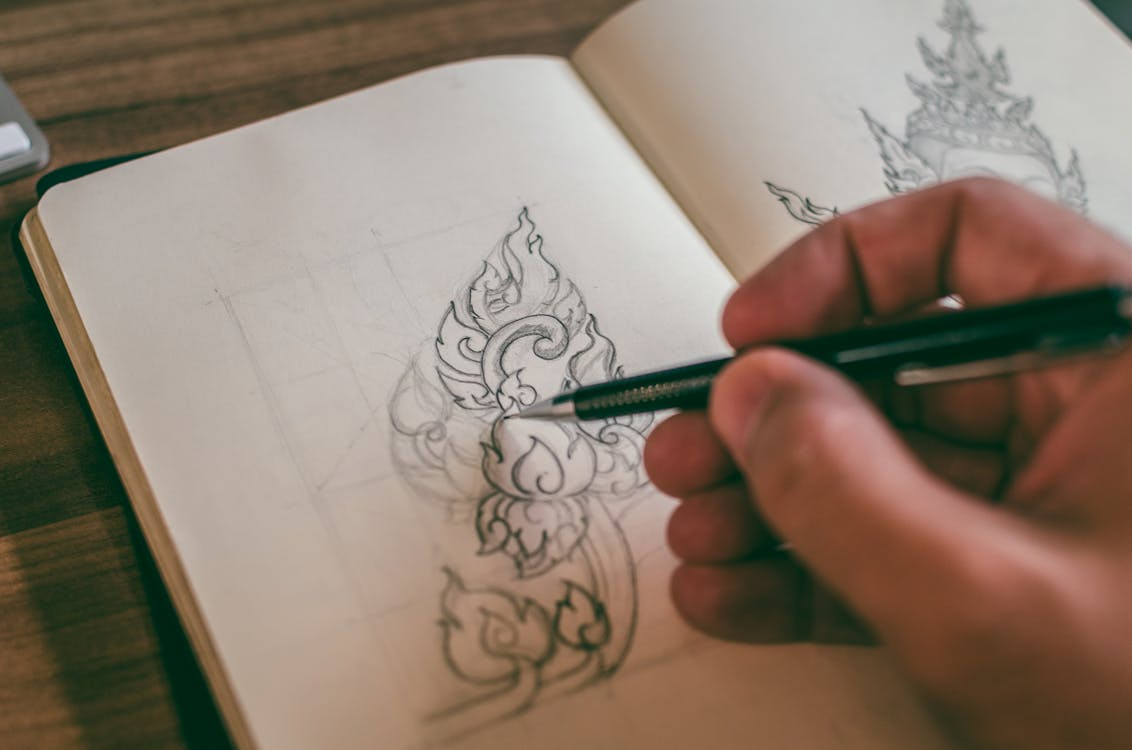
If you are anything like me, you are always looking for ways to improve. Unfortunately, sometimes figuring out how to do so can be overwhelming. This is the way I felt about drawing. It was especially stressful because, as an aspiring architect, sketching is an essential skill for me to have. I got discouraged, thinking that I would never be good enough to convey my ideas to clients. That is, until I took a step back and was mindful about implementing certain tips that I learned from my professors and classmates, which I hope will inspire anyone looking to get better at drawing.
Learn the Basics.
This might seem like an obvious one, but I know people tend to get too excited and try to jump right into drawing. While you can definitely pick up a few techniques doing it this way, there will come a point where you can no longer improve until you know what you are doing. Because I’m trying to cover a lot in this article, I won’t go too much deeper into this topic, but I will list a few key elements that you should be familiar with.
- proportion
- line weights
- shapes
- shade and shadow
- composition
- foreground, middle ground, background
- texture
- graphite hardness/softness
Use Proportions.
I cannot stress enough the importance of this step. No matter how hard you try, your drawings will always look slightly off if you do not take the time to measure it out in the beginning. And by measuring it out, I don’t mean literally, obviously, I mean paying attention to the way everything relates to each other. For example, if I am drawing a building, I might take note that it is twice as tall as it is wide. In fact, this is exactly how portrait artists ensure that the head of a person doesn’t appear too large compared to the body and vice versa.
Break Everything Into Shapes.
This is one of the first things we learn to do as kids. We have books and toys that help tell the difference between a square and a circle, because nature is full of shapes, and the human brain is naturally wired to recognize these patterns. You will quickly learn that a lot about drawing is using basic elements of human perception to your advantage. Thus, you should start each drawing by slightly sketching out the shapes you see (a building looks like a rectangle, a face looks like a circle, etc.). Once you have done that, capturing a certain object will feel less intimidating. You have to be careful, though, and remember that just because things generally look like shapes, nothing in nature is perfect. So, if you draw a face as just a circle, it will look 2D and like a stick figure. To avoid this, make sure that after you have sketched out the shapes, to go back in and add any imperfections, making the shape look more like what you see. Remember, the shapes are just a guide, not the final product.

Switch Medium (aka use the right tools).
I know, I know. It can be scary trying something you don’t feel ready to use. I used to think that I had to get really good at sketching in pencil to even consider using a pen. The truth is, while they do have some similarities, the techniques for using them are completely different. Line weight, shading, etc., all change depending on which tool you are using. If you are having trouble with a pencil, I suggest trying a pen. You would be surprised by the different effect it has on your drawing. Don’t worry about the fact that the pen is permanent because that’s also part of the training, since it forces you to stop trying to capture something perfectly (which can be extremely hard sometimes) and just start drawing (here is a good, inexpensive pen to try). If you are looking for a sketchbook, I recommend this one as well as these pencils, if you are still set on not using a pen.
Have A Focal point, Don’t Try To Capture Every Detail.
If you try to capture everything, you and the viewer of your art will get overwhelmed. Instead, you need to focus on one thing, for example, the dome of a building, which you either give more detail to or a greater contrast in value from the rest of the composition. By doing so, you will capture people’s attention and make it clear to the viewer what they are supposed to be focusing on and what are just supporting details. Think of it as having a main character and side characters. If every character in a book were a main character, the book would be extremely long, and the reader would lose track of all the details, leading to a less enjoyable experience. In fact, there is something in the art world called gesturing. This basically means that you imply certain aspects of an object that aren’t as important as others. This keeps your piece from getting too cluttered. In art, especially architectural drawings, it is important to remember that you are not trying to capture something realistically; you are trying to make it readable. Sometimes, there are details that in a drawing would make it look worse, even though it would be more accurate. I know, this is weird to get used to, but that’s why you practice, to train your eyes to see these things.
Copy Masterpieces And Learn From Others.
This is actually what many famous artists started out doing. They would sell detailed replicas of pieces they knew were great, taking note of the techniques the artist used, where they placed highlights and shadows, etc. If you can’t look at a photo or object yet and draw it well, this is a great place to start, since the hard part of figuring out how to make the art read well is already done for you; you just have to take the time to not only copy, but really observe and learn from it as you do so. Also, don’t be ashamed to ask other people you know who are good at art for help. We actually get words like “studio” and “masterpiece” from the idea that the young artists, usually men, would learn from older artists, who knew what they were doing because someone else taught them. If you are too scared to do this, however, there are a lot of books, YouTube videos, and websites that dive even deeper into the basic and more advanced techniques than I am able to do in this article. I found books such as Drawing and Sketching in Pencil and Rendering in Pen and Ink extremely helpful.

Take Breaks.
When you stare at something for long enough, your brain gets accustomed to how it looks. It is important to walk away from your art every once in a while to check it from a distance. This way, you can test how your work reads to a viewer across the room while also giving yourself much-needed time away from a project. When you come back, you may notice that a value is too light or too dark in one place or that your building is leaning slightly to the left. Trust me, as someone whose grade would depend on their drawings, this is one of the hardest steps for me to follow, but it’s also one of the most important, not only for your sanity, but also for the quality of your art piece. If you tend to get tunnel vision like me, setting timers is a great way to remind yourself to take a break, even if just for a few minutes.
Keep Your Sketchbook Neat And Always With You.
You obviously want to make sure your sketches are distinguishable and don’t get ruined, but you don’t want to be too worried about the layout. As someone who likes being organized, it took a while for me to learn that the point of a sketch book is for it to be messy; there doesn’t need to be any rhyme or reason to it. What needs to happen is skipping every other page, especially if you are using a pencil, so that the graphite does not smear. Additionally, always having your sketchbook with you ensures that you will get your sketching in somehow, someway. Whether it’s waiting for the train or in between classes or meetings, the important thing is that you are practicing and practicing well.
Do Warmups And Quick Sketches: It Doesn’t Have To Be Perfect.
This goes back to my previous point about practicing. There were countless times when I got so overwhelmed before starting a drawing, I didn’t even want to start. I was so worried it wouldn’t turn out the way I wanted that I didn’t even want to do it. This is a problem because you’re not going to get any better if you don’t practice. A great way to get over the fear of starting is to just start drawing random things. Even just starting with lines gets the pencil moving and your creative eye going. And, let’s face it, your drawings will be bad at first; in fact, you still might have an occasional bad drawing even if you’ve gotten really good. It is important to remember that this is okay; everyone makes mistakes from time to time. What defines you and your ability to succeed is not being perfect, but have the courage to try and get back up when you are inevitably pushed down.
Be Patient And Have Fun.
The truth is, you will not become the next Michelangelo overnight. It takes hard work and time to get better. Don’t assume that just because you are sketching every day that you will automatically get better. While you might improve slightly, the only way to actually improve is by using the techniques many artists have used. That being said, don’t get too worried about making the piece look good that you don’t even want to draw. As I have said multiple times at this point, the only way you will get better is if you actually practice. In the end, it should be a hobby you enjoy, not a chore you dread doing.

Final Thoughts
While I know I still have a way to go, I continue to be encouraged by the growth I have seen over time. You have to be willing to embrace the journey, make mistakes, and maybe even be bad at first to have any chance at getting better. Let me know what tip was most helpful for you or if you have any of your own to share. And if you are looking for another hobby to pick up along with sketching, you should check out my post 10 Practical Crafts You’ll Actually Use.
Disclaimer: this article contains affiliate links, which means I get a commission for anything you purchase using these links without any additional cost to you
